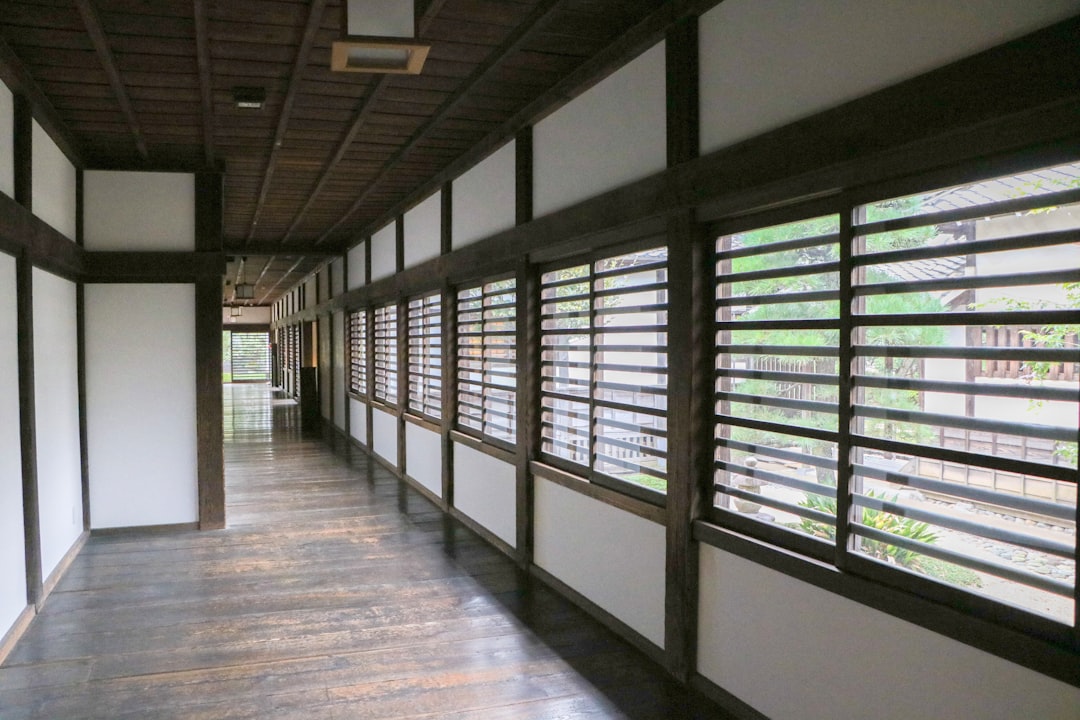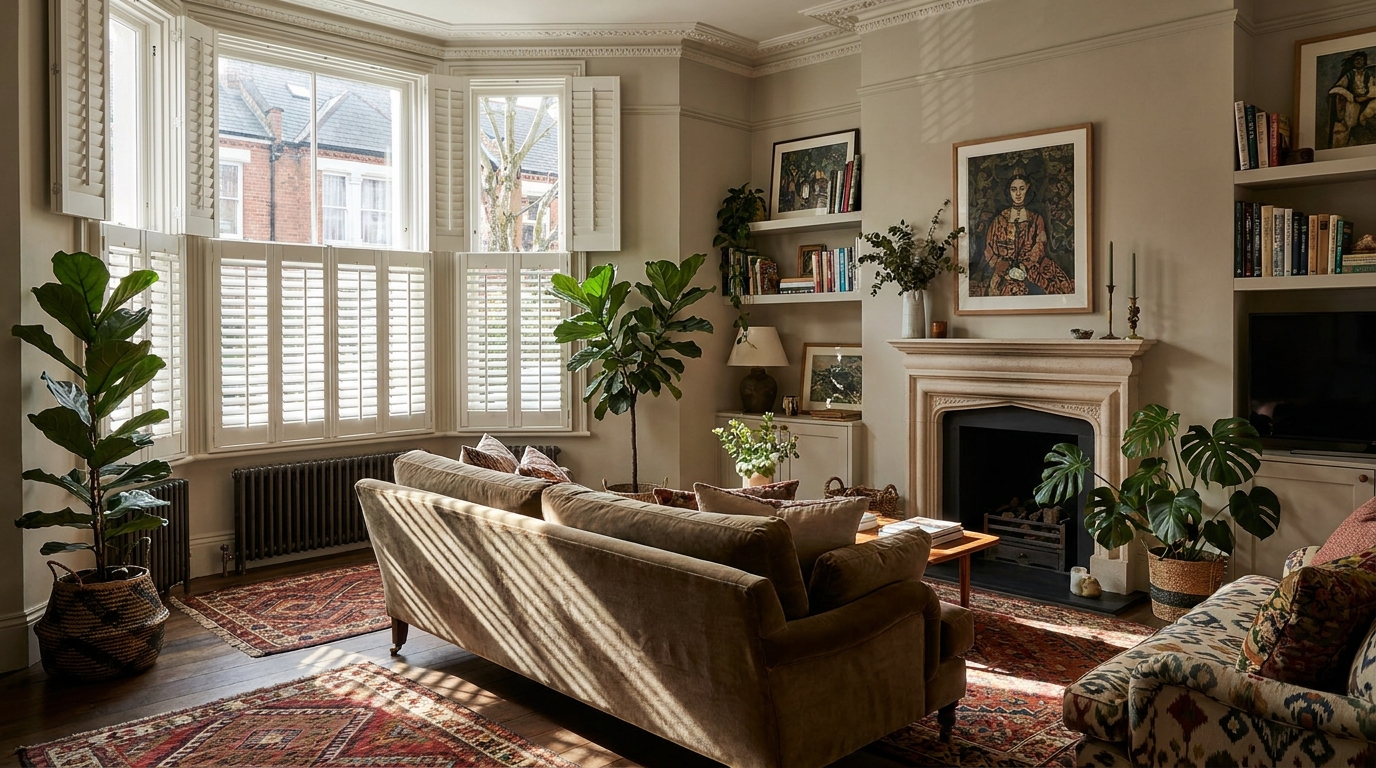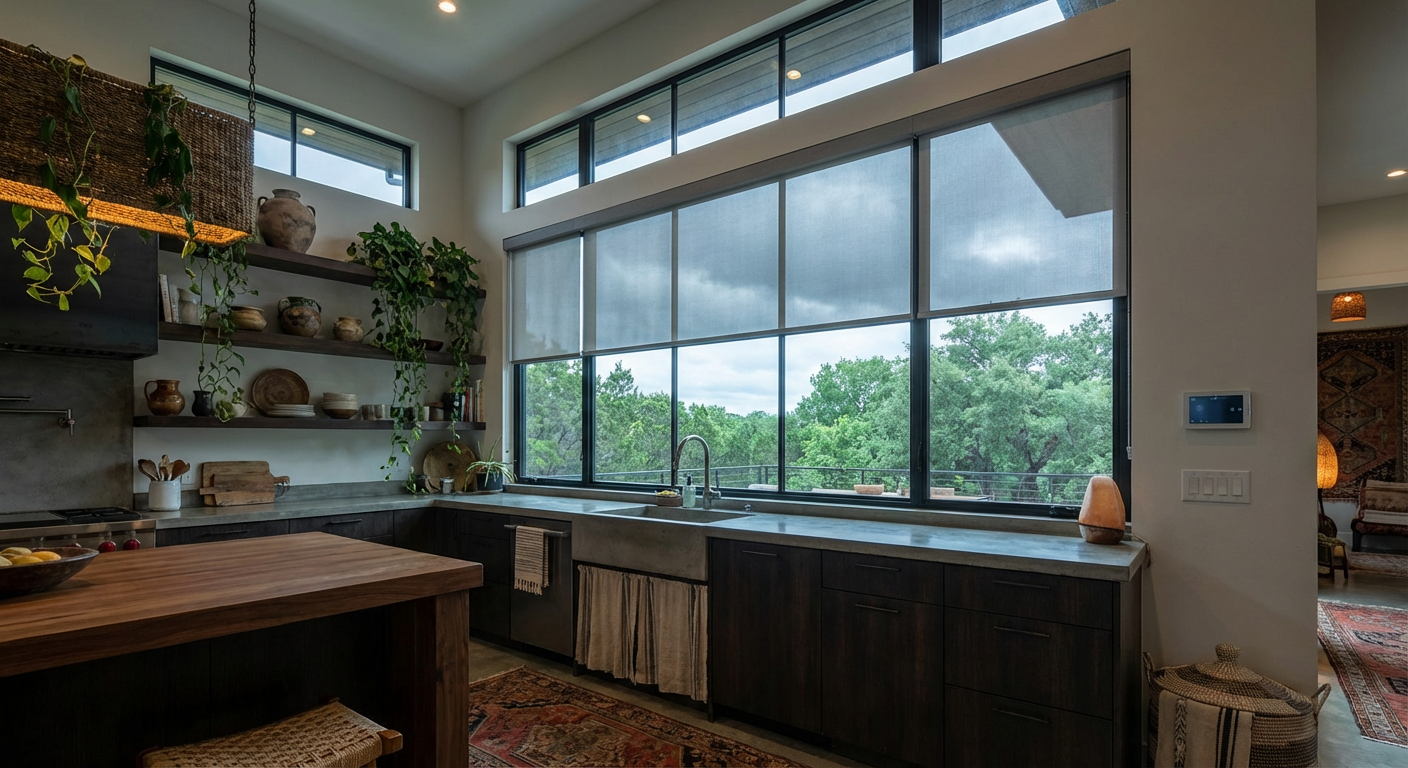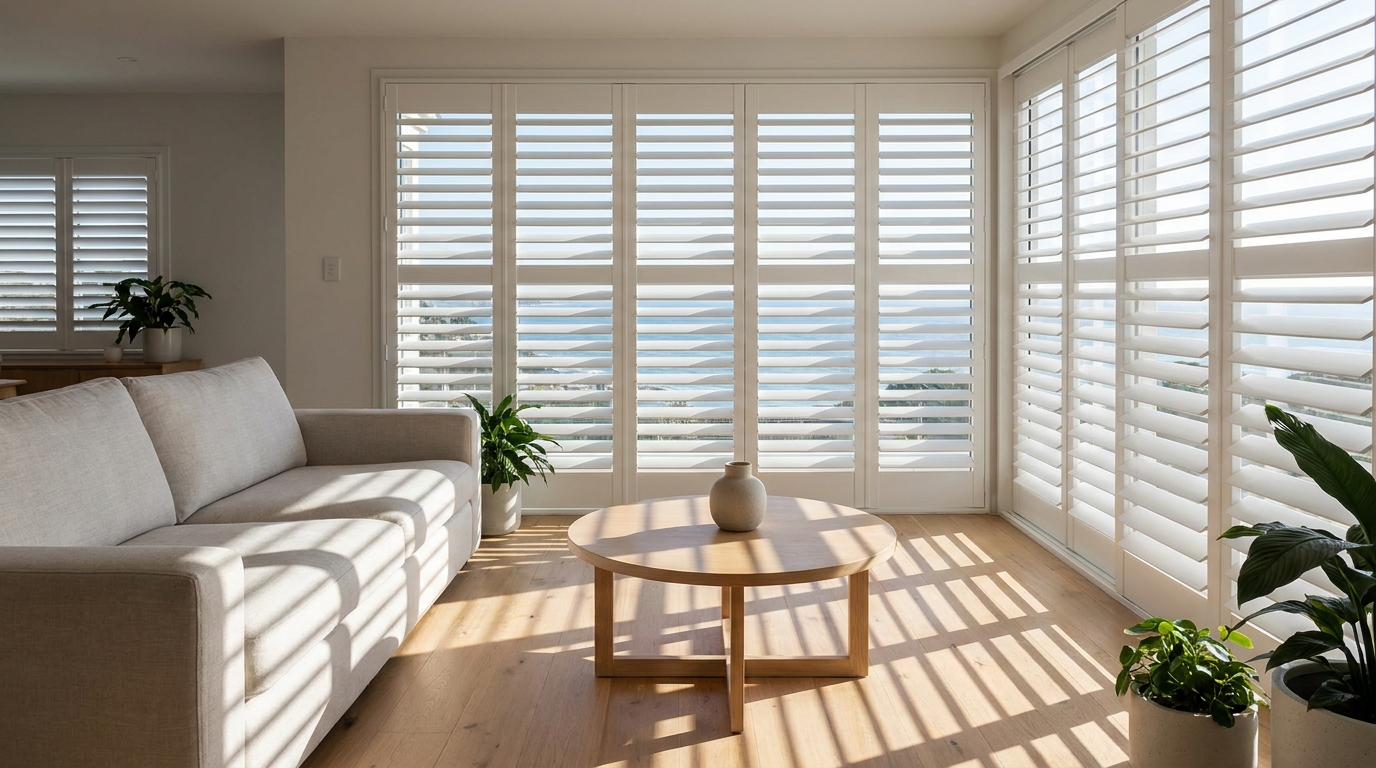
Shutters do cut heat, but only when the louvers are closed, and on a west-facing window in July a light-filtering cellular shade or a tight-weave solar shade will usually hold out more heat than a shutter will. For most houses we look at in the Conejo Valley, the practical answer is shutters through the bulk of the home for the look and the durability, with shades on the two or three openings that actually cook.
What is actually heating the room, and why it is only a few windows
The floor plans in Thousand Oaks, Newbury Park, Moorpark and Simi Valley built between the mid-1980s and the mid-2000s share a pattern: a lot of glass, tall two-story living room windows, and at least one big slider. Twenty to thirty openings in a 2,800 square foot house is normal. But the heat complaint almost never involves twenty windows. It involves the west and southwest glass between about 3pm and sunset.
Two things drive that. First, direct sun landing on the glass. A north-facing window in Dos Vientos and a west-facing window in the same house are not the same problem, and no interior product changes that. Second, the window itself. A 1990s dual-pane with no low-E coating passes a lot more solar energy than a newer low-E retrofit, which is why two neighbors in Wood Ranch with identical elevations can have very different afternoon rooms.
Here is the part that gets glossed over in sales appointments: anything you hang on the inside is a second line of defense. The sun has already passed through the glass by the time it hits your shutter or shade. The product's job is to absorb or reflect that energy and keep as much of it as possible from radiating into the room. That is why exterior shading — a deep patio cover, a mature tree, an exterior screen — outperforms every interior product. If you have that on the west side already, your interior choice matters less. If you have bare glass facing the Simi hills, it matters a lot.
In Ventura County? Get a free quote from a local installer
Send us your window sizes and a few photos and we'll quote you, usually the same day. Want us to come out with samples and measure? The consultation is free. Call or text us three days and times that work.
Serving Thousand Oaks, Newbury Park, Westlake Village, Oak Park, Simi Valley and nearby.
Where shutters win, and where a shade beats them
Closed plantation shutters give you a rigid, opaque panel plus a pocket of still air between the panel and the glass, held in place by a frame that semi-seals the perimeter of the opening. That is real. A room in Spanish Hills with shutters closed at 4pm is meaningfully cooler and darker than the same room with the louvers at 45 degrees.
The catch is the word closed. Most people do not close shutters. They tilt them, because the reason they bought shutters was light and view. A louver at half-open passes a large share of the direct sun, and once the sun is low and shining straight down the barrel of the louvers, tilt does very little.
A cellular shade works differently. The honeycomb cells trap air, which is a poor conductor, and the shade sits flat against the opening. Lowered, it is the best interior performer we install on a hot west window, especially with a room-darkening liner or side channels that close the light gaps at the edges. It also disappears when raised, which shutters cannot do.
A solar shade sits in the middle. A 3 or 5 percent openness fabric keeps the view and cuts glare while blocking a large share of the direct radiation. Color matters more than people expect: a light exterior face reflects energy back out through the glass, while a dark charcoal fabric absorbs it, warms up, and re-radiates into the room. Dark reads better for view-out and worse for heat. If your priority is the Boney Mountain view from a Newbury Park great room, a dark solar shade is the right call and you accept a little more warmth.
Rough order for pure heat control on an interior product, best to worst: cellular with side channels, light-faced solar or blackout roller, shutters with louvers fully closed, shutters tilted, wood or faux wood blinds.
Louver angle, mount depth, and the air gap
Three details change how a shutter performs and none of them show up on a quote.
- Which way you close them. Closing the louvers so the leading edges tip up toward the glass throws stray light and heat at the ceiling. Closing them down aims it at the floor and your furniture. For glare on a TV wall, up is better.
- Inside mount versus outside mount. An inside-mount shutter set into the jamb creates that still-air pocket and looks cleaner. It needs depth. Many vinyl retrofit windows in these tracts leave only an inch or two of usable jamb, which forces a shallow Z-frame or an outside mount on the drywall return. Outside mount still works for heat, sometimes better, because the frame overlaps the opening and closes the perimeter gaps.
- The slider. A 10 or 12 foot slider is usually the single largest heat source in the house. Bypass shutter panels on a track handle it, but the panels stack and you lose some doorway width. A wide roller or cellular over the same opening stacks into a few inches at the top. This is the opening where we most often recommend a shade even when the rest of the house is getting shutters.
Mixing products without the house looking mismatched
Homeowners resist mixing because they picture a patchwork. In practice, the mix reads fine if you follow two rules.
Rule one: shutters go where the house is seen, shades go where the heat is. Front elevation, entry, formal rooms, and anything visible from the street stay consistent — same white, same louver size, same frame style throughout. From the curb in North Ranch or Lake Sherwood, a house with matched shutters across the front looks finished no matter what is happening in the back bedrooms.
Rule two: match the whites. Shutter paint whites and shade fabric whites are not the same off the shelf. Hold real samples together in the room before ordering, not on a screen. This is the single most common regret we hear about mixed installs.
Dust deserves its own note here. Santa Ana season pushes fine grit through every gap in the house, and inland Simi Valley, Moorpark and Ojai get the worst of it. Painted shutter louvers wipe clean with a damp cloth. Tight-weave solar and roller fabrics vacuum or wipe fine. Textured woven woods and heavy drapery hold dust and need real attention. Sun exposure is the other durability question: dark shade fabrics on a west window will show fade before a painted shutter finish will, which is one honest argument for shutters on the hardest-hit glass even though a shade blocks slightly more heat.
What a whole-house project costs, and how to phase it
Plantation shutters run $55 to $95 per square foot installed, with a 12 square foot minimum billable per opening, so small bathroom and laundry windows price as if they were larger. Roller, solar, zebra and cellular shades run $495 to $955 per window installed for a typical size. Wood and faux wood blinds run $250 to $650. Motorization adds $200 to $500 per shade, which is worth considering on tall stairwell glass you would otherwise never lower. Installation is included in those numbers, not billed after.
On a 25-opening house, that spread is the whole conversation. A sensible sequence is to cover the west and southwest rooms first, live with them through one Santa Ana stretch, then finish the rest of the house to match. Nothing about the pricing changes if you do it in two phases, and you will know more about what you actually need. If you are collecting numbers from more than one company, our line-by-line comparison checklist will tell you whether the quotes are even measuring the same thing, and you can upload one to the free tool at /quote-check.
When you are ready for a real number, 805 Shutters & Shades comes to the house, measures every window, brings actual shutter and fabric samples to hold up against the glass in the afternoon light, and leaves you with a firm quote. The in-home consultation is free. Book a visit and we will walk the west side of the house with you first.
Frequently asked questions
Do plantation shutters actually keep a room cooler?
Yes, when the louvers are fully closed. A closed shutter panel plus the still air between the panel and the glass cuts a real amount of afternoon heat. Tilted louvers do much less, and once the sun is low and shining straight along the louver angle, tilt does almost nothing.
Shutters or cellular shades for a west-facing window?
For pure heat control, a lowered cellular shade with side channels generally beats a closed shutter, because the trapped air in the cells and the sealed edges cut both radiant and conducted heat. Shutters win on durability, dust cleaning, resale look, and the fact that they never need to be raised or lowered.
Does louver size change how much heat comes in?
Not meaningfully. A 2 1/2 inch and a 3 1/2 inch louver close to about the same opaque panel. Louver size affects view-out when open, how much light comes through at partial tilt, and proportion on large windows. On the tall windows common in Conejo Valley tract homes, 3 1/2 inch is the usual choice.
Can I mix shutters and shades in the same house without it looking odd?
Yes, if you keep the front-facing and public rooms consistent and put shades in the rooms driven by heat, and if you match the whites. Shutter paint whites and shade fabric whites differ, so compare real samples side by side in the room before ordering.
What does it cost to shutter a whole house in Ventura County?
Plantation shutters run $55 to $95 per square foot installed, with a 12 square foot minimum billable per opening, so small windows price higher per foot. Shades run $495 to $955 per window installed for a typical size. Installation is included in those figures, and the in-home consultation is free.
In Ventura County? Get a free quote from a local installer
Serving Thousand Oaks, Newbury Park, Westlake Village, Oak Park, Simi Valley and nearby.
- Quote from your window sizes and photos, usually the same day
- See real samples in your space
- We carry every major manufacturer