On a standard bedroom window, a cordless-lift shade is the simple, safe, inexpensive fix and you should just buy it. On the tall living-room glass and the wide sliders that come with most Conejo Valley floor plans, cordless lift stops being practical — nobody is getting a ladder out twice a day — and the real child-safe answers are motorization, a wand-controlled product, or shutters, which have no lift cord to begin with.
Why cords are the problem, and where they're still hanging in Ventura County houses
Two kinds of cord matter. The obvious one is the looped cord or chain — the continuous loop on a roller shade or vertical blind, or the pull cords on an old horizontal blind that have been tied together at the bottom. A loop at child height is the hazard everyone knows about. The less obvious one is the inner lift cord on older cellular and Roman shades: the cords that run through the back of the fabric and can be pulled out into a loop when a child tugs on the shade itself.
The housing stock here is why this comes up so often. A lot of what we look at in Thousand Oaks, Newbury Park, Moorpark and Simi Valley was built between the mid-1980s and the mid-2000s, and plenty of those homes still have the original builder-grade corded blinds, or a set installed a decade later that also had cords. A 2,800-square-foot house in Dos Vientos or Wood Ranch can easily have twenty-five openings. If even a third of them have a cord dangling, that's a real inventory to work through.
Pet owners deal with a smaller version of the same thing. Cats find looped chains, dogs pull at cords near a slider they watch the yard through, and either way the cord ends up chewed, knotted, or off its pulley.
In Ventura County? Get a free quote from a local installer
Send us your window sizes and a few photos and we'll quote you, usually the same day. Want us to come out with samples and measure? The consultation is free. Call or text us three days and times that work.
Serving Thousand Oaks, Newbury Park, Westlake Village, Oak Park, Simi Valley and nearby.
What changed in the industry, in plain terms
The safety standard the window covering industry works under now draws a hard line between ready-made and custom products.
Ready-made, or stock, products — the packaged blinds and shades you pull off a shelf at a big-box store and cut down or hang as-is — have to be cordless, or have cords that a child can't reach. That's why the blind aisle looks so different than it did years ago, and why so many stock shades are now cordless-lift or wand-tilt only.
The custom side — anything made to your measurements, including what we sell — is held to tighter limits on how long a cord can be and how accessible it can be. Continuous-loop chains, where they're still offered, have to be anchored, meaning the tensioner screws into the wall or window frame and the loop cannot be left slack. That anchor is not optional and it is not a suggestion; a loop hanging free with the tensioner still in the bag is an installation that was never finished.
The practical upshot for a parent: if you're buying custom today, cordless or wand or motorized is usually the default anyway. The risk in your house is what's already on the windows, not what you're about to order.
Four cord-free mechanisms, and where each one breaks down
Cordless lift (spring-assisted). You grab the bottom rail and push it up or pull it down; a spring inside the headrail holds it wherever you stop. Clean look, no hardware on the wall, modest cost. It works beautifully on bedroom and bathroom windows. It has two limits. The first is reach — if the bottom rail sits above your head when the shade is up, you can't lower it without a stick or a ladder, which rules it out for a two-story family room window in North Ranch or a transom above a slider. The second is weight: a wide blackout roller or a large woven wood gets heavy enough that the spring feels stiff and the shade wants to drift.
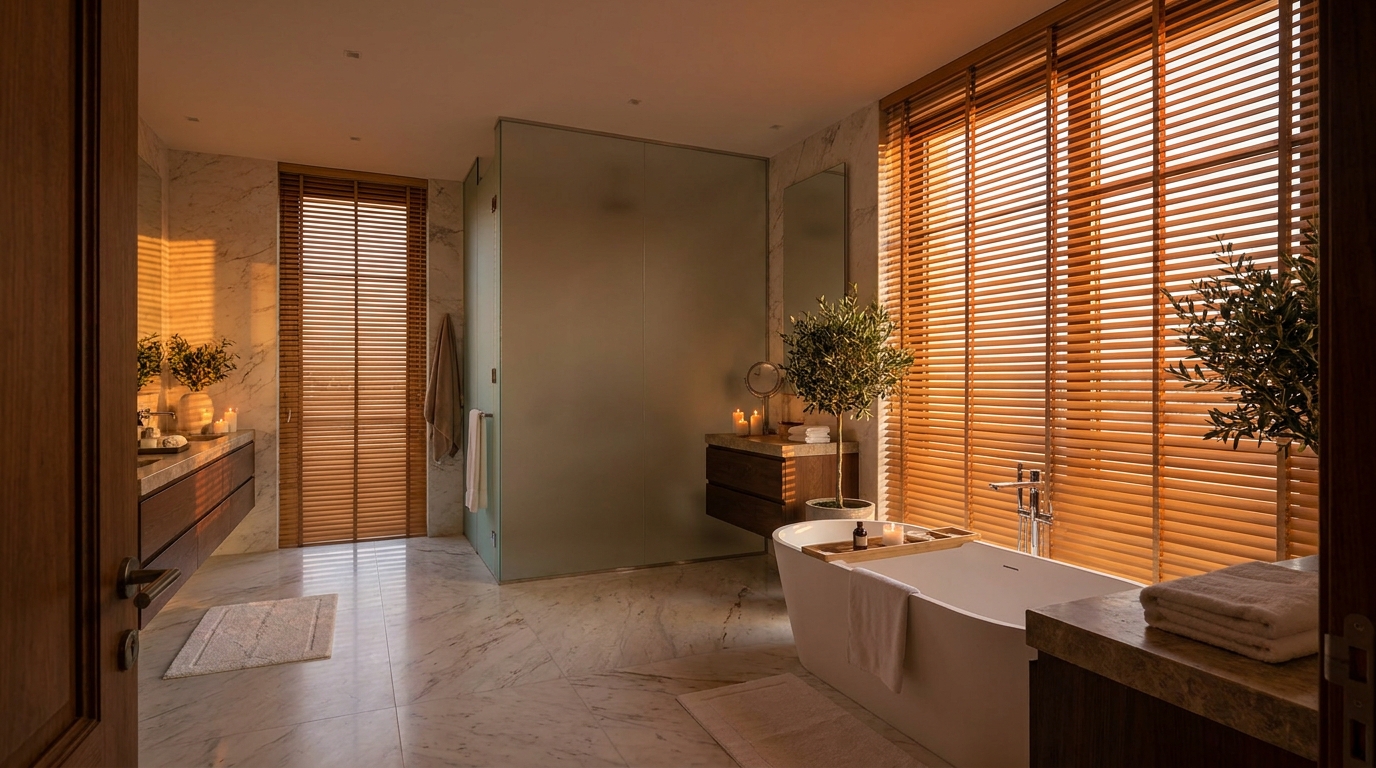
Wand control. A rigid plastic or metal wand you twist or slide. On blinds and shutters it tilts the louvers; on vertical blinds and panel tracks it also traverses them side to side. There's no loop, and there's nothing that can be pulled into a loop. For a wide slider, a wand-operated vertical or a sliding panel is one of the least expensive child-safe answers there is.
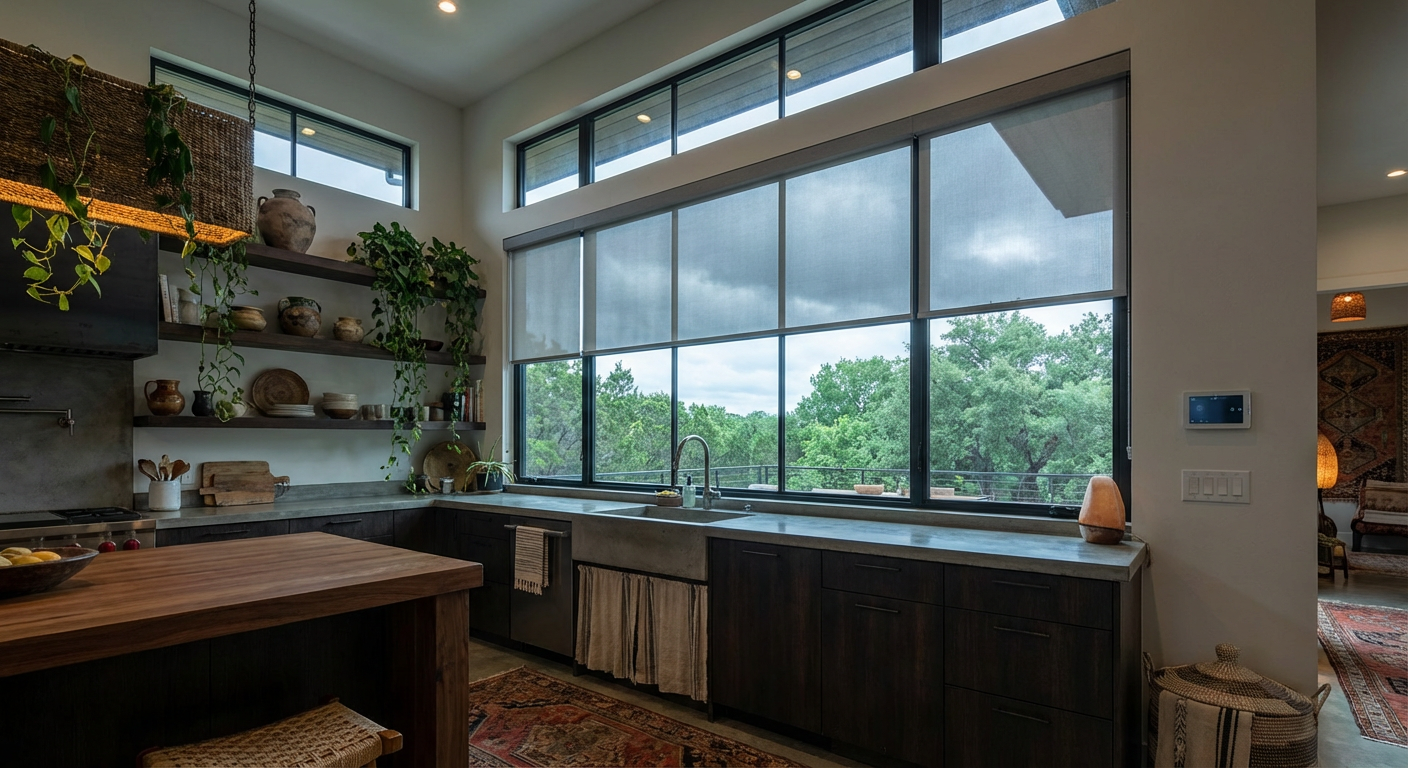
Motorization. A battery or hardwired motor in the roller tube or headrail, run from a remote, a wall switch, or your phone. This is the honest answer for tall glass, for the clerestory windows above the fireplace, and for any room where you actually want the shades moving on a schedule for heat control. Battery wands recharge with a plug or, on sun-facing windows, a small solar panel. It is priced per window on top of the shade. On five hot, high windows that's a real number; on twenty-five windows it's a different project, which is why most families here motorize the tall and the inconvenient and leave the rest cordless.
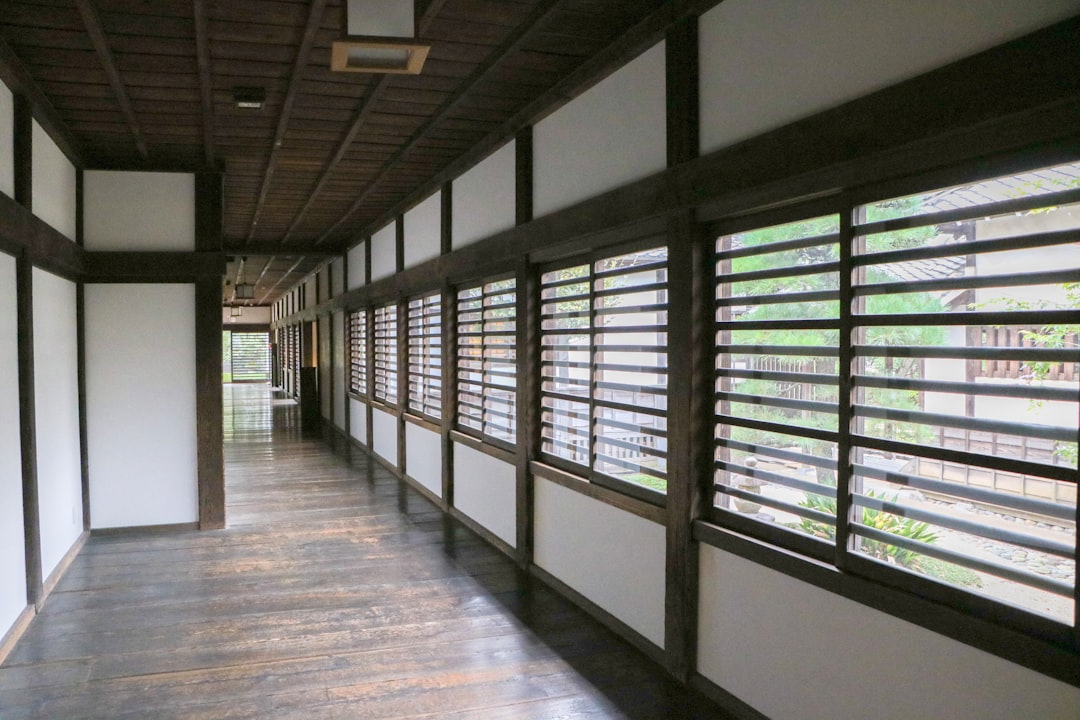
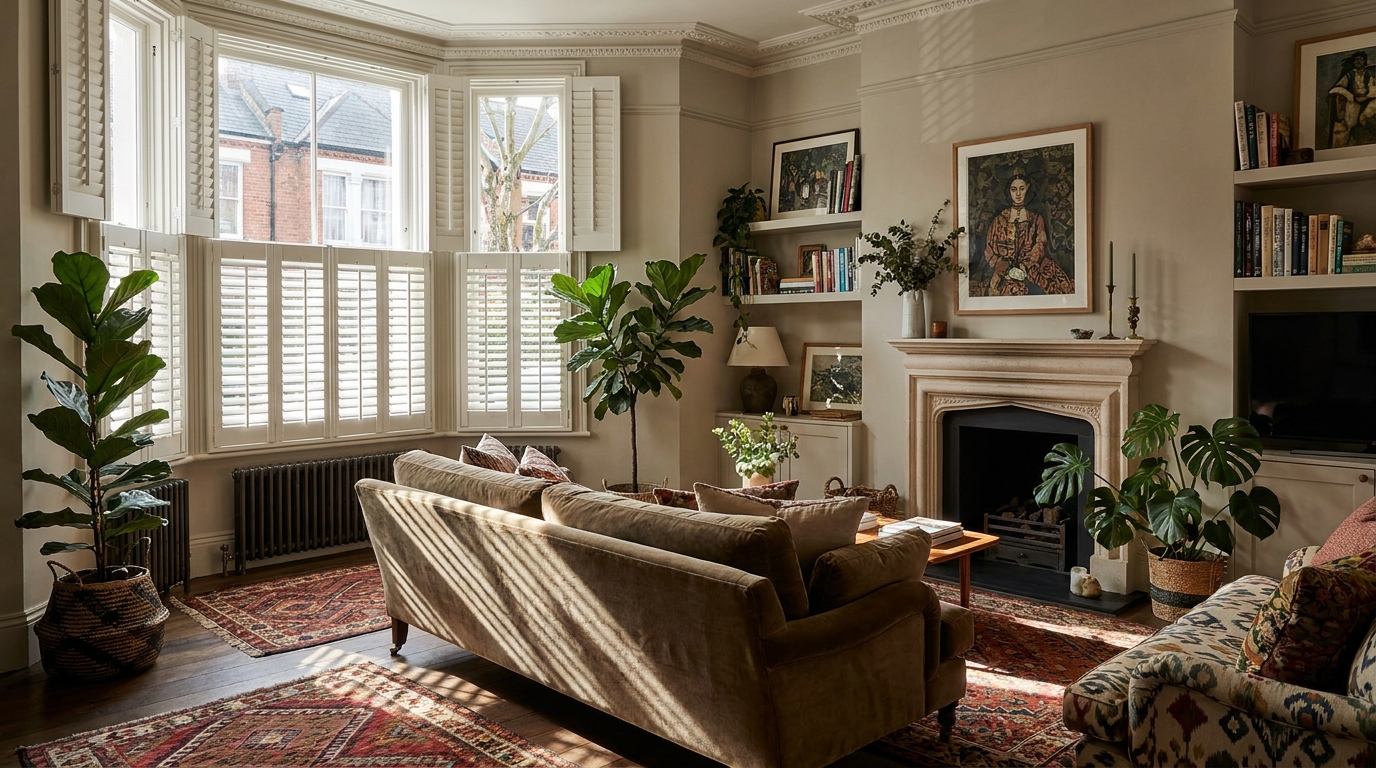
Shutters. A plantation shutter has no lift cord and no loop at all — the panels swing on hinges and the louvers tilt by hand or by a hidden tilt rod. That structural simplicity is a genuine safety advantage and one reason shutters show up so often in kids' rooms. Shutters are priced by the square foot, with a twelve-square-foot minimum billable per opening, so small bathroom windows cost more per foot than they look like they should. Shutters also shrug off the dust that blows through Simi Valley and Camarillo on a Santa Ana week — you wipe them instead of vacuuming a fabric.
How to audit the house this weekend, in priority order
You don't have to replace everything at once. Walk the house and sort it.
- Nursery and kids' bedrooms first. Any corded product in a room where a child sleeps unsupervised goes to the front of the line. Blackout matters here too, which is why cordless cellular and cordless blackout rollers are the usual pick.
- Then furniture placement. A crib, toddler bed, changing table, bookshelf or chair pushed against a window turns an out-of-reach cord into a reachable one. Move the furniture even if you're replacing the blind.
- Then playrooms, bonus rooms and the family room. High-traffic, low-supervision. The big tall windows usually live here too, which is where motorization earns its cost.
- Check the loops you forgot about. Verticals on the slider, a continuous chain on a roller behind a sofa, cord-wrapped drapery tiebacks, and the cords on shades in a guest room the kids only enter at Thanksgiving.
- Look at the tensioners. If a looped chain is staying for now, confirm the tensioner is screwed into the frame and the loop is taut.
Two more things worth knowing. Retrofit cord cleats — the little hooks you wrap excess cord around — depend on an adult doing it perfectly every single time, which is not a system. And cordless is simply better looking: no cord stack down one side, no chain against the glass, and on a wall of matching windows the sightline stays clean, which matters when you're covering twenty openings in one house.
Planning the swap across a whole house
Every home is different, so we give a free written quote from your window sizes or photos before anyone comes out. Cordless roller, solar, zebra and cellular shades, wood and faux wood blinds with wand tilt, cordless or motorized Roman and woven wood shades, and drapery on a baton or motorized track are all priced per window. Request your quote here.
A common Ventura County plan: shutters or faux wood blinds through the bedrooms and baths, cordless cellular where blackout and heat control both matter, and motorized rollers on the tall living-room glass and the slider. If afternoon heat is part of your problem, our breakdown of shutters versus shades on hot rooms in the Conejo Valley covers which openings deserve which product.
When you're ready, we'll come to the house, measure every window, bring real samples you can lift and tilt with your own hands, and leave you with a firm quote — install included. The in-home consultation is free. Book a measure, or if you already have a bid from someone else, upload it to our free Quote Check and we'll tell you what's in it.
Frequently asked questions
Is cordless lift safe enough for a nursery, or do I need motorization?
Cordless lift is safe for a nursery — there is no cord to reach and no inner cord to pull into a loop. Motorization is about convenience and reach, not extra safety. Choose motorization when the shade is too high to grab by hand, too heavy to lift comfortably, or when you want it moving on a schedule for heat control.
Can I just cut the cords off the blinds we already have?
Cutting a looped pull cord removes the loop but usually leaves the blind inoperable or leaves inner lift cords still able to be pulled out. It is a stopgap, not a fix. If a corded blind is in a room where a child sleeps or plays unsupervised, plan on replacing the product rather than modifying it.
Are all custom window treatments cordless now?
Not all, but cordless, wand and motorized options are the default on most product lines. The industry safety standard requires ready-made stock products to be cordless or have inaccessible cords, and holds custom products to tighter limits on cord length and accessibility, including anchored tensioners on any continuous-loop chain.
What is the cheapest child-safe option for a wide slider?
A wand-operated vertical blind or a sliding panel track is generally the least expensive cord-free way to cover a wide slider. Sliding shutter panels and motorized rollers cost more but hold up better to dust and sun, which matters on west-facing sliders in Simi Valley, Moorpark and Camarillo.
How is motorization priced on a shade?
Per window, on top of the shade itself, depending on the motor and the power source. Most families here motorize only the tall or hard-to-reach openings — the two-story living room glass and the clerestory windows — and use cordless lift everywhere else.
In Ventura County? Get a free quote from a local installer
Serving Thousand Oaks, Newbury Park, Westlake Village, Oak Park, Simi Valley and nearby.
- Quote from your window sizes and photos, usually the same day
- See real samples in your space
- We carry every major manufacturer