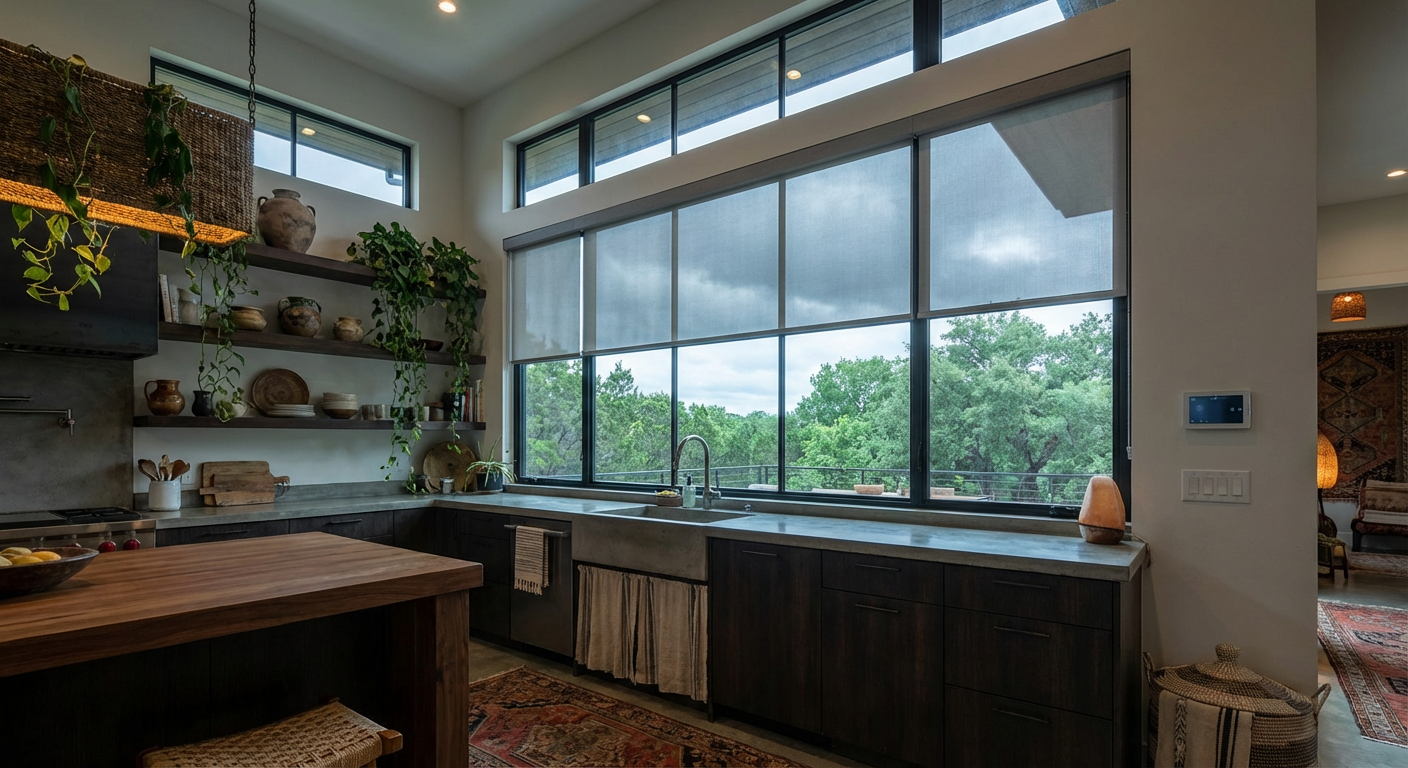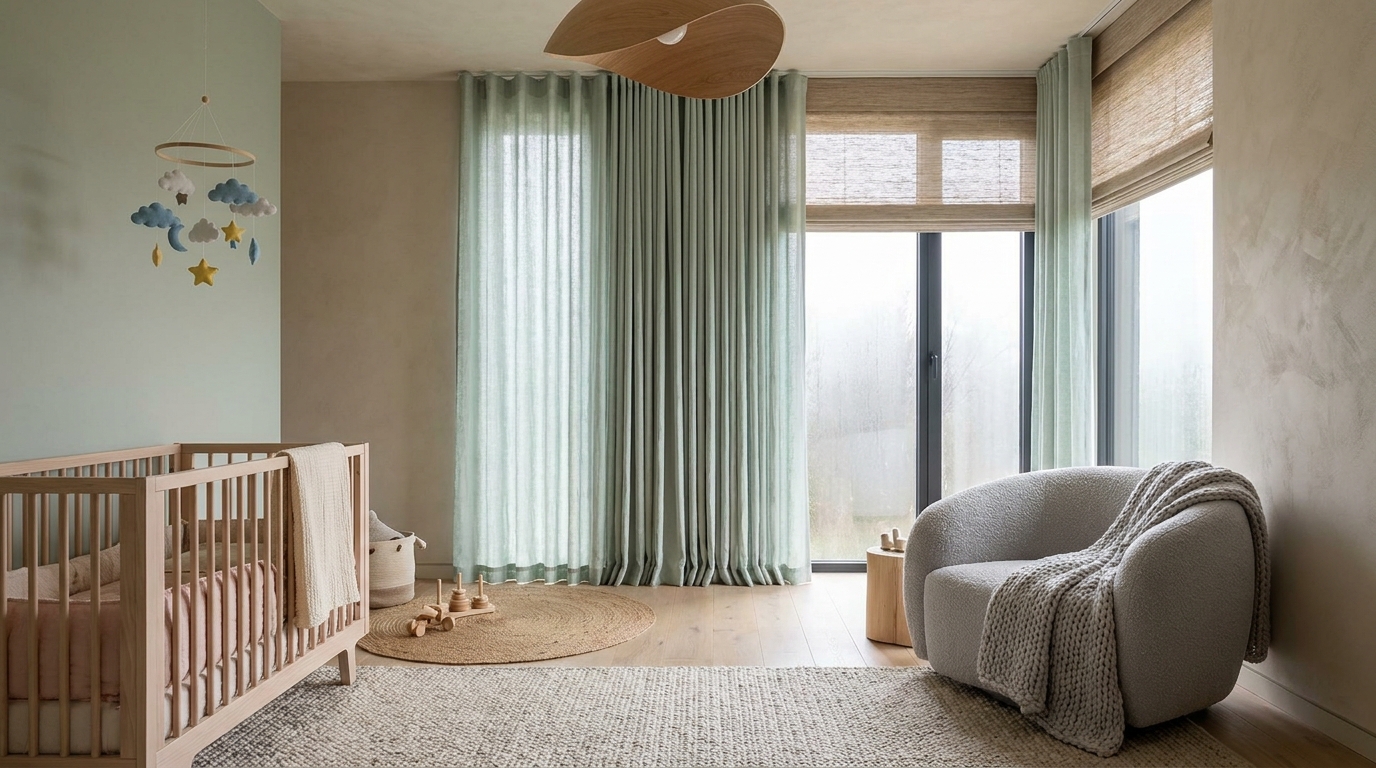
A whole-home order moves through five stages — in-home measure, product and material selection, final order approval, manufacturing, and installation — and the stages that most often run long are the two the homeowner controls: deciding and approving. Lead time on the manufacturing side varies by product and by season, we quote the current one at the consultation, and no honest company will promise you a specific holiday date.
Why a 22-window house in the Conejo Valley has a different clock than a two-window job
Most of the houses we measure in Thousand Oaks, Newbury Park, Moorpark and Simi Valley were built between the mid-1980s and the mid-2000s, and they share a floor plan habit: lots of openings. Twenty to thirty per house is ordinary. A two-story entry window, a tall living room wall, two or three sliders, a kitchen garden window, plus bedrooms.
That matters for timing in three specific ways.
More openings means more decisions. A two-window order is one fabric and one color. A whole-home order in Dos Vientos or Wood Ranch is usually a shutter color for the public rooms, a shade fabric for the west side, something different for the bathrooms, and a judgment call on the stairwell. Every one of those is a place the order can sit while someone thinks about it.
More openings means mixed products. Very few Ventura County houses want the same thing everywhere. Shutters through the front of the house and shades on the glass that actually cooks is a common split, and we wrote about how to make that call in shutters or shades on the hot rooms. Mixed products means more than one manufacturing lead time running at once, and they are not the same length.
More openings means a longer install day. A full house is not a drop-in-and-go appointment. It gets scheduled as a block, and blocks fill up faster in the fall.
🏠 Want Expert Advice on YOUR Windows?
Send us your window sizes and photos for a quote, or book a $150 in-home measure and see real samples in your space.
The five stages, and who actually controls each one
Here is the sequence, with the honest answer about who is holding the clock.
1. The in-home measure. You control when this happens. Someone comes out, measures every window in the house, brings real samples you can hold against your own trim and your own light, and you get a firm quote. This is a single appointment, not a series of them. The bottleneck here is purely how soon you book it.
2. Product and material selection. You control this entirely. Some homeowners decide at the table with the samples in hand. Some need a week with a few pieces in the room at 4pm to see what the light does. Both are fine. But this stage has no fixed length — it is exactly as long as you make it, and in our experience it is the single biggest variable in whether a fall order lands where people hoped.
3. Final order approval. Shared, but mostly you. Before anything is cut, sizes, colors, louver size, control side, mount type and stack direction get confirmed. Read it. This is the last moment a mistake is free. Once it goes to the factory, a custom panel built to the wrong dimension is a remake, and a remake starts the manufacturing clock over.
4. Manufacturing. Nobody in your house controls this. Custom shutters and shades are built to your numbers after you order. Lead time depends on the product family, the finish, whether it is motorized, and the season. It is not a fixed figure we can publish, which is why we give you the current one at the consultation rather than a number on a webpage that may be stale by the time you read it.
5. Installation. Shared. Install is included in our quoted prices. Scheduling depends on the install calendar and on your availability, and on a whole-home job you will want most of the day open.
Where fall orders actually stall in this county
Specific things, not general ones.
The stairwell or the two-story entry. Big, visible, expensive, and the one opening people cannot settle on. Houses in North Ranch, Spanish Hills and the Lake Sherwood estate lots almost always have one. It is common for an entire order to sit while the tall window gets decided. If that is you, split it: approve the rest of the house and let the stairwell follow as its own order.
Motorization and power. Motorized shades add a decision layer — battery or hardwired, where the charging access sits on a window fifteen feet up, whether you want them on a hub. If there is any electrical work involved, that is a separate trade on a separate calendar, and it needs to happen before install day, not after.
Stain matching. Painted shutter finishes are straightforward. Matching a stain to existing millwork, a cabinet run, or the shutters a previous owner left in three rooms is not. It usually means a sample step, and a sample step is real time.
Sliders. A wide patio slider in a Big Sky or Camarillo tract home has more product options than a bedroom window — bypass shutter panels, a bifold, a single large roller, a panel track. Homeowners who breezed through eighteen windows often spend the longest on this one.
Waiting on a comparison quote. Getting more than one number is smart, and we say so. But if a second or third company is slow to come out, your clock is running the whole time. If you already have a written quote in hand, you can run it through Quote Check for free instead of scheduling another appointment just to see whether your number is reasonable. If you want the full comparison method, it is in our line-by-line quote checklist.
Decide the hard rooms first, not the easy ones
The instinct is to start with the rooms you care most about looking right — the living room, the dining room, wherever the table goes for Thanksgiving. Do the opposite for sequencing purposes.
Decide the openings with the most variables first: the tall glass, the sliders, anything motorized, anything that needs a finish match. Those are the items that eat calendar. Bedroom shutters in a standard 1990s opening are a short conversation, and they are not what holds up an order.
Then consider phasing deliberately rather than by accident. If family is coming and you are hosting in the great room and the dining room, order those rooms as one approved package and let the guest bathroom and the back bedrooms go as a second order. Two orders placed on purpose beat one order that sits unapproved while you think about a window nobody will look at in November.
One more practical note for houses on the inland side: if your west glass has been running hot through a Santa Ana stretch and you also want it covered for guests, that is one decision, not two. Pick the product that handles the heat and let it also be the product that looks right. Trying to solve them separately is another way an order stalls.
What to ask before you sign anything this fall
Ask for the current lead time by product family, not a single house number. Shutters, rollers, romans and drapery do not move at the same pace, and a mixed order arrives in more than one wave unless someone plans for it. Ask whether your job will be installed in one visit or staged. Ask what happens if a panel arrives damaged or a size is off — every custom manufacturer has remakes, and the question is how fast yours gets handled. Our install warranty is 12 months; manufacturer warranties vary by product, so ask which one covers what.
And ask plainly whether the company will commit to a date. If someone guarantees a holiday delivery before your order is even built, that is a sales tactic, not a schedule.
If you want to get the clock started, book an in-home visit. Someone comes to the house, measures every window, brings real samples to hold up against your trim and your light, and you leave the appointment with a firm quote. The $150 measure fee is credited toward your order. If you would rather not have anyone out yet, you can send sizes and photos and we will quote remotely — that still gets you the current lead time in writing, which is the number that actually determines what is possible.
Frequently asked questions
How long do custom shutters and shades take to make?
There is no single answer, which is why we don't publish one. Manufacturing time depends on the product family, the finish, whether the shade is motorized, and how busy the season is. We give you the current lead time for your specific products at the consultation, in writing, alongside the quote.
Can you guarantee my window treatments will be installed before Thanksgiving or Christmas?
No, and you should be skeptical of anyone who does before your order is built. What we can do is tell you the current lead time for the products you're choosing so you can decide whether the timing works, and flag which of your openings are likely to take longest.
Should I order my whole house at once or split it into phases?
Split it on purpose if one or two openings are holding up the rest. A two-story stairwell window, a wide slider, or anything needing a stain match often takes the longest to decide. Approving the rooms you've settled on and letting the difficult openings follow as a second order usually gets more of the house covered sooner.
What's the fastest part of the process I can control?
Booking the measure and making your material selections. The in-home visit is one appointment where every window gets measured and you see real samples. After that, how fast you choose and approve the order is entirely yours — and it's the stage that most often adds time to a fall project.
Does motorization add to the timeline?
It can, in two ways. Motorized shades add decisions — battery versus hardwired, control access on high windows, hub setup — and if any electrical work is needed, that's a separate trade that has to be done before install day. Build times for motorized product can also differ from manual, so ask for both when you get your lead time.
Ready to See Your Options?
- Remote quote from your sizes and photos
- See real samples in your space
- $150 in-home measure, credited to your order